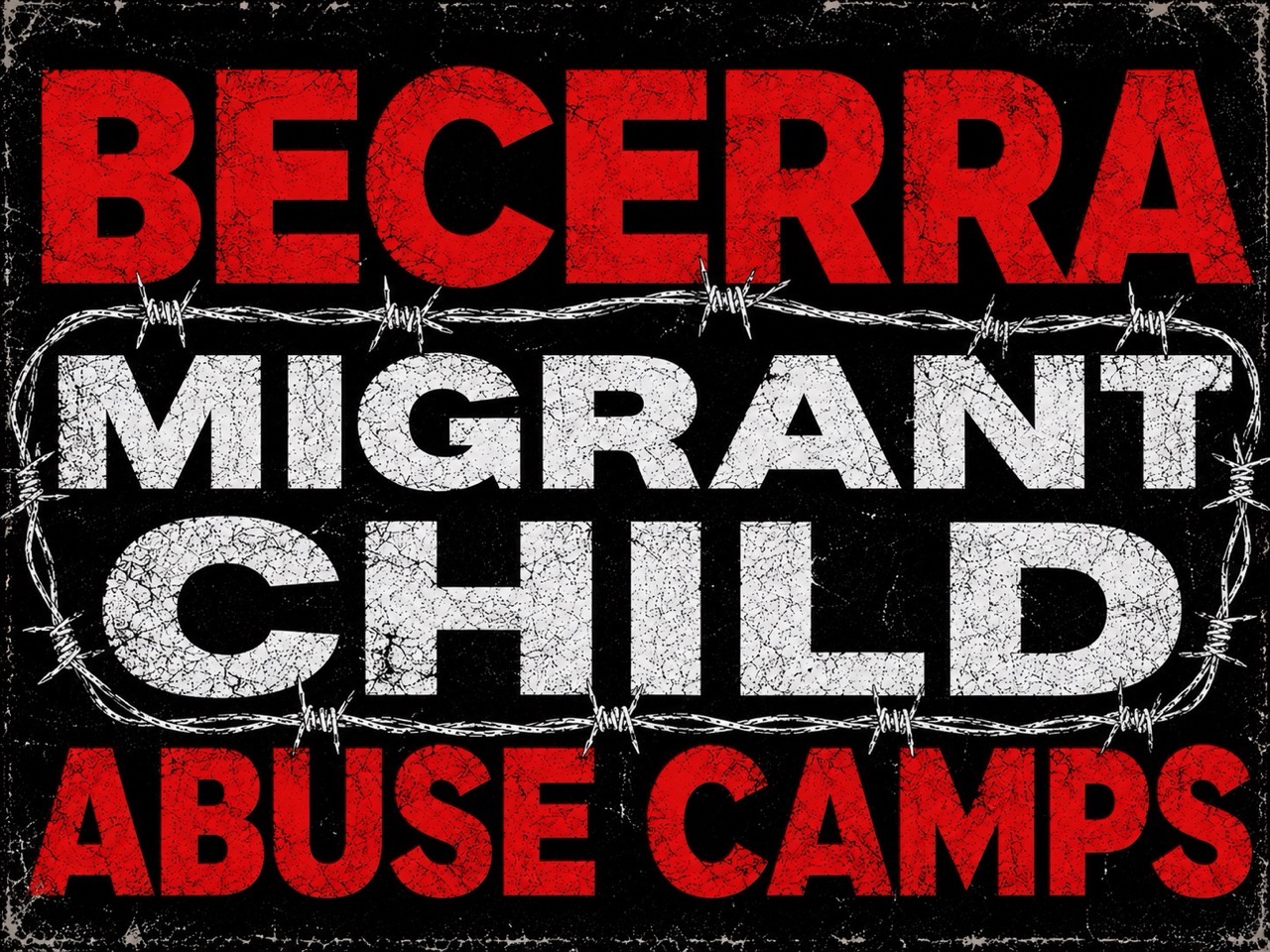
Becerra migrant child abuse camps

He ran the camps. Now he wants to run California.

Submit what you know
↓ the record

What Becerra Did

Four steps. One man's decisions.

01

He didn't want 'kids in camps'

Xavier Becerra took over HHS with one political problem: children stacked up in his camps made him and his administration look bad. His fix was not to make the camps safe. His fix was to empty them.

The problem he solved was the photographs. Not the children.

02

So he removed the vetting

The checks that stood between a child and whoever showed up to claim them — fingerprints, background checks, home studies, follow-up calls — were pushed aside so children could be released faster. Staff who objected were overruled, and some say punished.

No fingerprints. No background checks. No follow-up.

03

319,000 children were lost

Children were handed to adults nobody had properly checked, at addresses nobody verified, and then never followed up on. The government could not account for 319,000 of them. Roughly 140,000 are still unaccounted for today.

“We were sending children to the same addresses on multiple locations.”

04

Into traffickers and labor gangs

Federal investigators, prosecutors, senators and Becerra's own staff have described children released into sexual exploitation and into brutal jobs on night shifts in factories, slaughterhouses and construction sites.

“They looked very young, and they were all mostly Latinas who were now on Holt Street.”
The Numbers

479,000

Children put in Becerra's hands

Unaccompanied children who entered his department's custody during his tenure.

319,000

He lost track of

Children his department could not account for after releasing them.

140,000

Still missing today

Roughly this many have never been found.

100,000

Of them under 13

Many, if not most, of them in California.

The Record

01 — His decision

Xavier Becerra ran the Department of Health and Human Services. Protecting unaccompanied migrant children was his job, his department and his call. He chose speed over safety and pushed children out of his camps without basic safeguards, straight into trafficking and labor exploitation, with no real follow-up once they were gone.

02 — He was warned

This was not a surprise to him. His own people warned him what was happening to these children. Becerra's department ignored them and allegedly retaliated against staff who raised concerns. Children were exploited, abused and lost in camps Becerra personally controlled.

03 — He has never answered for it

Becerra has never taken responsibility. He has never apologized. He now wants to run California, and the public still does not have the full truth about what he did to these children.

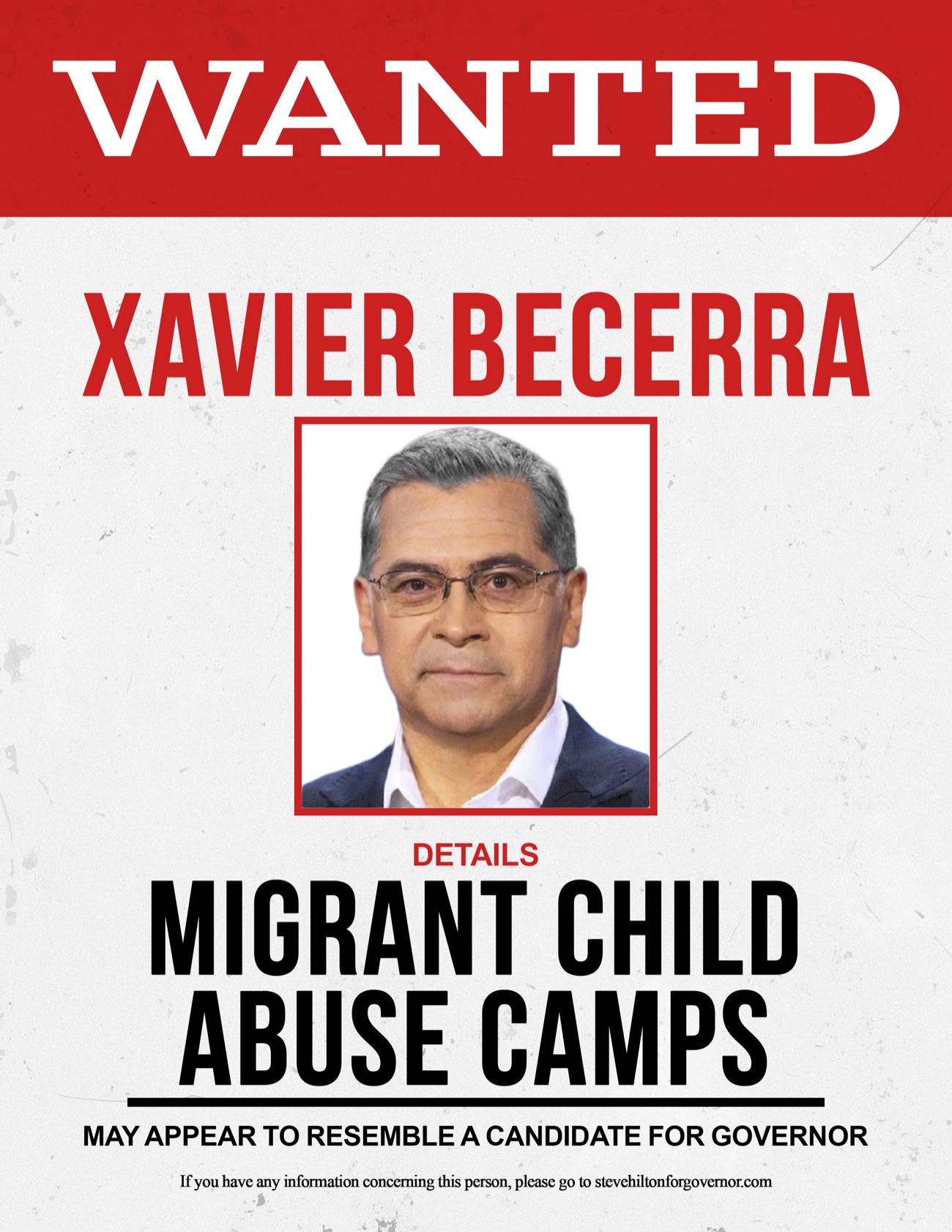
Wanted poster: Xavier Becerra

The official record on Xavier Becerra

No record of safety checks

HHS's own inspector general found that 16% of the files it reviewed had no documentation that one or more required sponsor safety checks were completed. It also found that 22% of children did not receive a timely safety and well-being follow-up call, while another 18% had no documentation that the call happened.

Source ↗

Warnings ignored

Democratic Senators Alex Padilla and Dick Durbin asked Becerra to answer reports that HHS had been warned children were being released into situations involving labor exploitation and trafficking, but allegedly retaliated against staff who raised concerns instead.

Source ↗

DOJ lawsuit over abuse

The Justice Department sued Southwest Key, an HHS-funded shelter operator, alleging a pattern of sexual abuse and harassment of children and failures to prevent, detect and report abuse.

Source ↗

Tens of thousands unvetted

According to a Senate Judiciary Committee summary of HHS data, more than 11,000 children were placed with sponsors who were not their parent or legal guardian and who were not fingerprinted or did not receive a background check. It also says home studies were not conducted for more than 79,000 children under 12.

Source ↗

Abuse alleged against children as young as five

The Justice Department's complaint alleges that in 2022, a youth care worker at the Casa Franklin shelter in El Paso repeatedly sexually abused three girls, ages five, eight and eleven, entering their bedrooms at night and threatening to kill their families if they told anyone. The complaint describes more than 100 reports of sexual abuse or harassment dating to at least 2015. These are allegations in a civil complaint.

Source ↗

A warehouse converted in 24 hours

Days after taking office in March 2021, Becerra personally called a Houston pastor and urged him to convert his warehouse into a shelter for unaccompanied children within 24 hours. Girls held there were reportedly confined to their cots, allowed to use the bathroom only twice a day, and one was seen being lured out of the facility around midnight by a woman who was not staff or security.

VICE News, July 7, 2021

Case managers told not to investigate

A Florida statewide grand jury reported testimony that case managers lacked training in recognizing false documents, investigating addresses and conducting criminal-history and fingerprint checks, and that they were sometimes ordered not to investigate suspicious documents or addresses.

Florida statewide grand jury report, Case No. SC22-796, March 29, 2023

Two children died in custody

In March 2023, a four-year-old Honduran child described as medically fragile died of cardiac arrest in HHS custody in Michigan. In May 2023, 17-year-old Ángel Eduardo Maradiaga Espinoza died at a shelter in Safety Harbor, Florida. HHS acknowledged that death in a statement that did not name him or say how he died; he was identified by the Honduran foreign ministry.

BBC News, May 12, 2023

The Testimony

A former caseworker at the Pomona Fairplex emergency intake facility in California described what she saw inside. Her statements establish what she says she personally saw, heard or learned through her work.

“None of that would have happened if we would have protected these children, but we failed, and I think we should all take responsibility.”

Two girls, ages five and seven, were separated

Grace was five at the time when I met her, and she reminded me a lot of my daughter… her response was I haven't seen my sister, I miss my sister and I don't know where she's at.

And so I asked where her sister was and nobody could give me an answer… They had to separate them because older children were abusing the younger children.

Now knowing that her sister went first and then Grace left this facility because we didn't have the welfare check, I don't know if that child got to her destination.

Former caseworker, Pomona Fairplex

Sexual abuse and harassment inside facilities

Some of these female employees are very young. And so when they were taking care of these minors, you did hear that there were some sexual harassment going on between the minor to the staff. And when the staff reported those incidents, they got fired.

There was no confidentiality between the minor with the case manager… And even if these children were being harmed by these other minors, they couldn't really say anything because they were next to them.

If something has happened, if they've been raped or not, there should be privacy and there was no privacy.

Former caseworker, Pomona Fairplex

The conditions that made exploitation possible

There was no vetting process, even though they said there was, but there wasn't. Taking documentation with people sending selfies is not vetting properly.

So we knew they were fake IDs; however, we had to take them.

However, the vetting was not proper, so we were sending children to multiple addresses. We were sending children to the same addresses on multiple locations.

We still have no proof that the child went to that address because we couldn't do any follow-up or continue with the case or, you know, see welfare checks. We were not allowed to do that either.

Former caseworker, Pomona Fairplex

A reported change on the street in Pomona

Prior to the Fairplex, it was mostly African American females that were working that street. After the Fairplex, we saw a difference in the girls that were on the street.

They looked very young, and they were all mostly Latinas who were now on Holt Street.

Through some different agencies, that has been disclosed. However, I can't fully say that that is a fact. But what I can say is what I've seen. And I've seen young Latinas working those streets when that was not the case before.

Former caseworker, Pomona Fairplex

New release — July 31, 2026

Campaign release

New release — July 31, 2026

Campaign release

Have information? Tell us.

Were you or someone you know released by Xavier Becerra's Department of Health and Human Services to an unsafe or unknown adult between 2021 and 2024? Did you work at one of these facilities or witness children being mistreated, exploited, trafficked or lost in the system?

Share your account, documents, photos, video or any other information you have. We may contact you for additional details.

✉ Submissions by email

Email your submission

Send everything you have to the campaign inbox. The button below opens your email app with a ready-made template — just fill in the blanks and hit send.

Email your submission

What to include

  • Your name and the best phone number or email to reach you
  • Your connection — former staff, family member, witness, survivor
  • The facility or location, and the approximate dates
  • What happened, in your own words — as much detail as you can
  • Attach any documents, photos or video directly to the email

By emailing us you confirm the information is truthful to the best of your knowledge and consent to the campaign contacting you. See our Privacy Policy.